


Welcome to the 124th edition of the Weekly Round-Up — your once-a-week digest filled with copywriting insights, AI tips, must-read articles, pretty cool copy examples, and more!
In this week’s issue:
Copy Tip: Structure vs. Style
AI Tip: Prompts = Assets
Show Your Marketing Boss Who’s Boss with Email Opt-Outs (via CMSwire)
Signposting: How to Reduce the Cognitive Load of Your Reader (via Wes Kao)
4 language psychology secrets from your competitors (via the Growth Tribe)
Podcast Pick: The New Avatar Framework (How to Build Avatars That Scale in 2026)
Swipe File Additions

Copy Tip of the Week
A lot of copywriters and copy editors think that “editing” is just making things better.
But too many younger editors only focus what’s on the surface and ignore what’s underneath.
Because what’s underneath is usually harder to fix.
I’m talking about *structure*, and no matter how hard you try, you can’t polish your way out of a structural problem.
If a piece of copy isn’t landing, most writers do what feels productive – they tighten sentences, swap words, add a stronger verb here, and cut a weak adjective there.
And yet, the copy still doesn’t work.
It’s not because the editing is bad. It’s because the problem isn’t in the sentences. It’s in the skeleton underneath them.
Here’s what I mean by skeleton: the logical sequence of your argument. The order in which you introduce the problem, the stakes, the solution, and the proof. Basically, the reason a reader should keep going.
If that sequence is broken, no amount of sentence-level polish fixes it. You’re just decorating a janky frame.
So before you edit a single word, ask: does this move in the right order? Does each section earn the next one? Is the reader being led somewhere, or just standing in place?
If the answer’s no, stop editing and restructure things first.
The words come last.
They always do.
AI Insight of the Week
A great prompt is an asset. Start treating it like one.
Most people write a prompt, get a good output, and move on. The problem is that it disappears into chat history and they rebuild it from scratch next time — slightly different (and slightly worse).
When a prompt consistently works, save it! It encodes your standards, your constraints, your audience context. Everything you’d otherwise re-explain every single time.
Then, keep a running doc of your highest-frequency prompts (e.g., subject line generation, offer angle brainstorming, first-draft briefs, etc.). Write the prompt once — *carefully* — and save it.
Worth capturing alongside it: what it’s for, what model it performs best on, any negative constraints that make it sing. Basically, treat it like a SOP.
A prompt you refine once and use weekly pays back every week.
Must-Read Articles
Show Your Marketing Boss Who’s Boss with Email Opt-Outs (via CMSwire)
Why I recommend it: Less than 1% of your list will opt out of Mother’s Day emails — but some of them are your highest-LTV customers. Chad White walks you through the exact conversation to have with your boss about why giving subscribers the choice protects revenue, not costs it.
Signposting: How to Reduce the Cognitive Load of Your Reader (via Wes Kao)
Why I recommend it: Your reader shouldn’t have to finish a sentence to know why it matters. Wes Kao breaks down “signposting” — starting sentences with phrases like “the surprising thing is…” or “the most important part to keep in mind is…” — so your reader’s brain can organize information as it arrives, not after.
4 language psychology secrets from your competitors (via the Growth Tribe)
Why I recommend it: Four language psychology principles that should govern every word across every channel — from the Pratfall Effect (why admitting a flaw builds trust) to Negation Blindness (why “no hidden fees” makes people think about hidden fees). Research-backed, example-heavy, and directly applicable to your next email or landing page.
You Might Also Like:
Leading Creative Teams Through Change: New Tools, New Trends, Same Humans

How your team operates will change this year.

BRAIN DRIVEN BRANDS
The New Avatar Framework (How to Build Avatars That Scale in 2026)
🎧 Listen on iTunes | Listen on Spotify
Why I recommend it: The customer avatar was invented by a software developer who asked “what would Kathy do?” — not “who is Kathy?” Sarah Levinger and Nate make the case for reordering the avatar framework: start with when someone needs you, then why, then who — because a Taco Bell drive-through at midnight has a Bentley and a beat-up Nissan in the same line.
🔓 Want access to my entire swipe file database?
Subscribe here to unlock the magic link.
Pretty Fly Copy
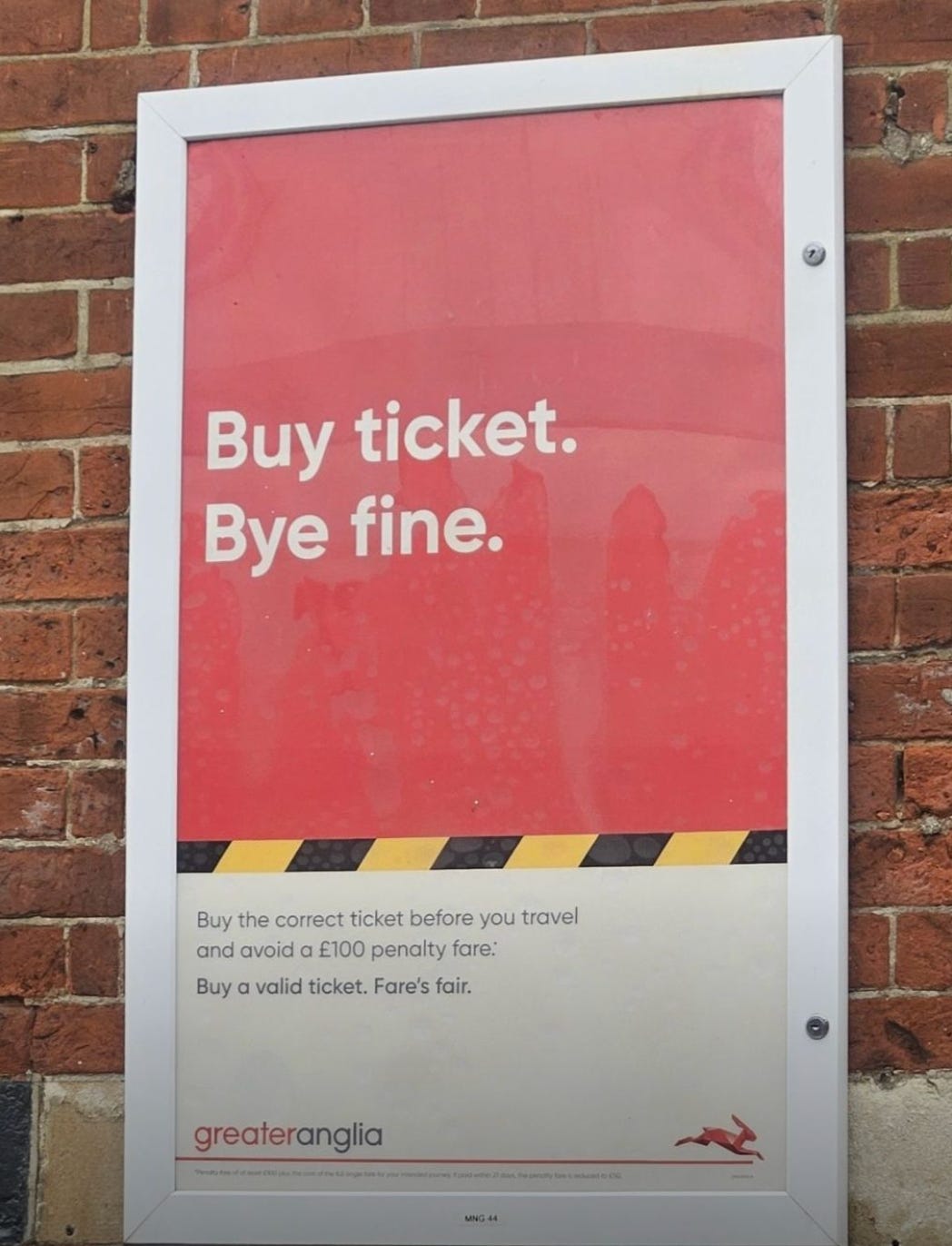
GREATER ANGLIA
Format: Ad
Spotted By: Sam Plant (LinkedIn)
Why he likes it: The best PSA copy doesn’t dress the message up. It finds the smartest, most memorable way to deliver it, without being so smart that it flies over people’s heads.
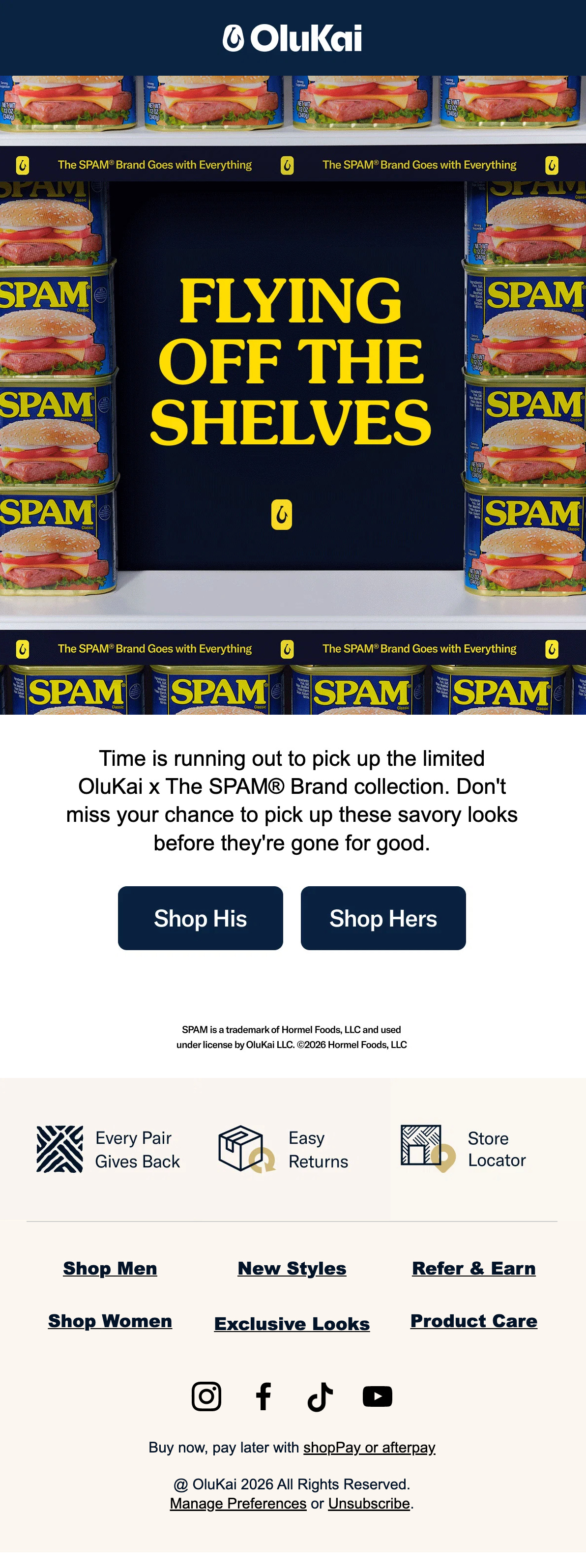
OLUKAI
Format: Email
Why I like it: Dead simple and I thought it was a joke until I realized it wasn’t.
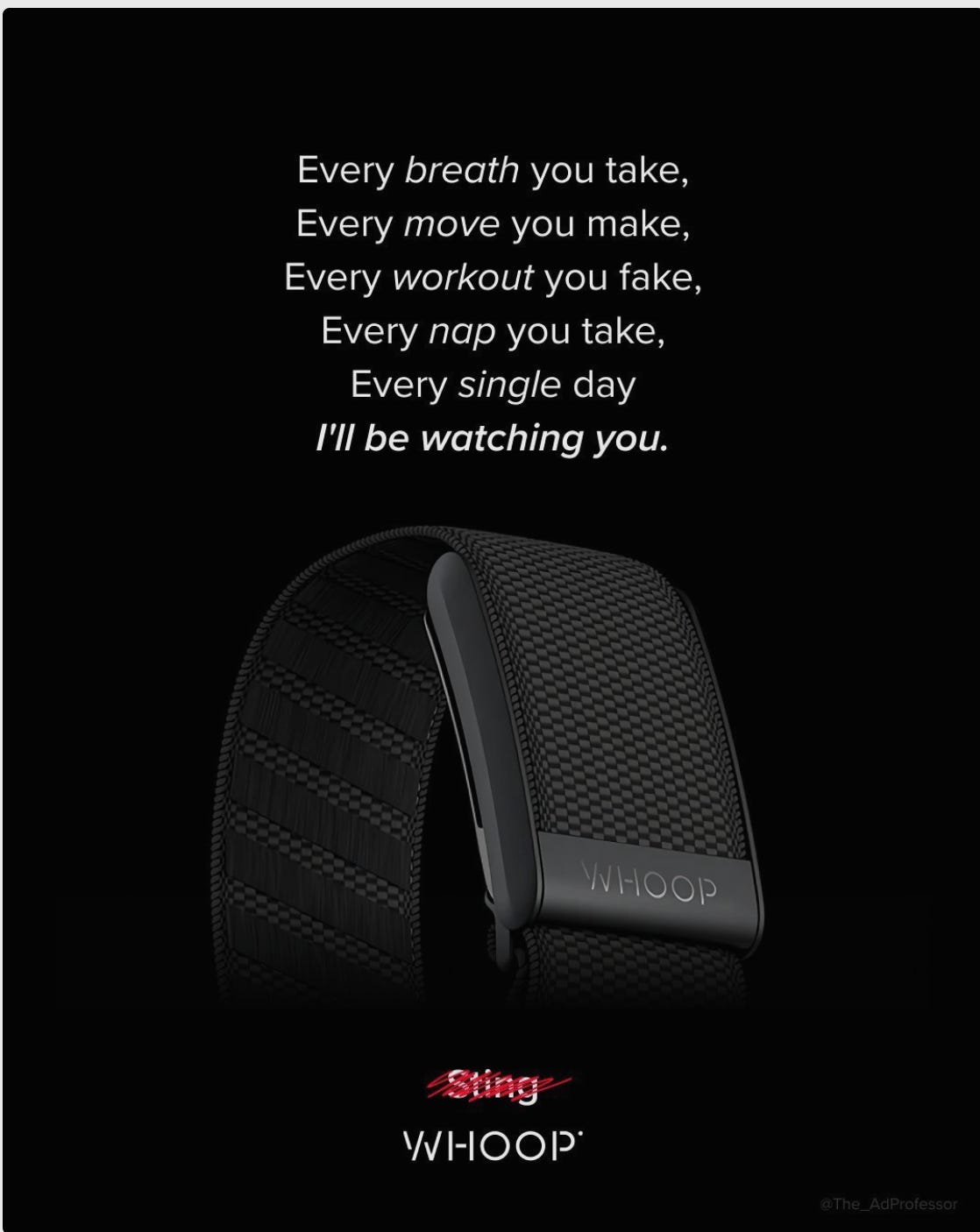
WHOOP
Format: Ad
Spotted By: The Ads Professor
Why I like it: A wonderful play on lyrics words.
That’s it for this week! If you have questions or comments — drop a note below.
✌️
Matt
Are you new here? Thinking about subscribing? Here’s what else you can expect.