


Welcome to the 123rd edition of the Weekly Round-Up — your once-a-week digest filled with copywriting insights, AI tips, must-read articles, pretty cool copy examples, and more!
In this week’s issue:
Copy Tip: Simple Sales → Simple Messaging
AI Tip: Tell Claude What NOT to Do
Courage vs. excuses (via Seth Godin)
When many buyer personas push ideal customers away (via Frictionless Growth Lab)
How to Create Systemic Growth Frameworks on Meta for Confident Scaling (via Foxwell Digital)
Leading Teams Through Change (via The Copy Minimalist)
Podcast Pick: Do Marketers Need a Personal Brand?
Swipe File Additions

Copy Tip of the Week
If your sale requires a spreadsheet to manage, it’s probably already too complicated.
Your customer is experiencing everything about it with fresh eyes. No briefing doc. No Slack thread. Just whatever lands in their inbox or shows up on their screen.
So if they have to stop and think about how the deal works, you’ve already lost ‘em.
In my opinion, the best sales are boring to explain:
X% off everything
$X off orders over $X
Spend $X, get a free gift
Simple offer = simple message = less friction between your customer and the buy button.
Complexity doesn’t signal value. It signals confusion.
AI Insight of the Week
Tell Claude what not to do.
Most prompts are all positive instruction. Write this. Sound like this. Include this. And then the output comes back and something’s off (e.g. too formal, too long, too generic, etc.) and you’re not sure why.
Here’s why: positive instructions tell Claude what to aim for. But they don’t rule out everything that misses the mark.
You asked for “conversational” and got “casual.”
You asked for “concise” and got “short but hollow.”
The instruction was followed.
The intent wasn’t.
Negative constraints, however, will help close that gap.
“Don’t use bullet points.”
“Don’t open with a question.”
“Don’t explain what you’re about to do — just do it.”
These aren’t just stylistic preferences, but guardrails that eliminate the most common failure modes before they happen.
The underlying principle: Claude is trying to satisfy your prompt, not read your mind.
A prompt with clear negative constraints is a tighter brief. And tighter briefs produce better work, whether you’re directing Claude or a copywriter.

Must-Read Articles
Courage vs. excuses (via Seth Godin)
Why I recommend it: “AI” has become a two-letter excuse for averaging everything down. Seth Godin’s short reminder that excellence is scarce precisely because excuses are abundant — and that knowing your purpose is what makes courage findable.
When many buyer personas push ideal customers away (via Frictionless Growth Lab)
Why I recommend it: A billion-dollar brand had to reshoot an entire ad because the buyer persona wasn’t deep enough to brief the creative team accurately. If your personas are vague, everything downstream (briefs, copy, campaigns, etc.) quietly excludes the people you’re supposedly trying to reach.
How to Create Systemic Growth Frameworks on Meta for Confident Scaling (via Foxwell Digital)
Why I recommend it: Most Meta scaling problems aren’t ad problems — they’re margin problems. If your AOV can’t support the auction, no amount of budget increase will fix your CAC. A thorough breakdown of the math, creative diversification, and campaign structure behind scaling that actually holds.
You Might Also Like:
Leading Creative Teams Through Change: New Tools, New Trends, Same Humans

How your team operates will change this year.

TALKING TOO LOUD w/ Chris Savage
Do Marketers Need a Personal Brand (feat. Carmen Vicente)
🎧 Listen on iTunes | Listen on Spotify
Why I recommend it: At some point, doing your job stopped being enough — now you’re expected to be the brand too?! Carmen Vicente breaks down why personal accounts outperform company pages by 40x, why your flops are a sign you’re testing enough, and what to do if you don’t want to become a content creator but can’t afford to be invisible.

🔓 Want access to my entire swipe file database?
Subscribe here to unlock the magic link.
Pretty Fly Copy
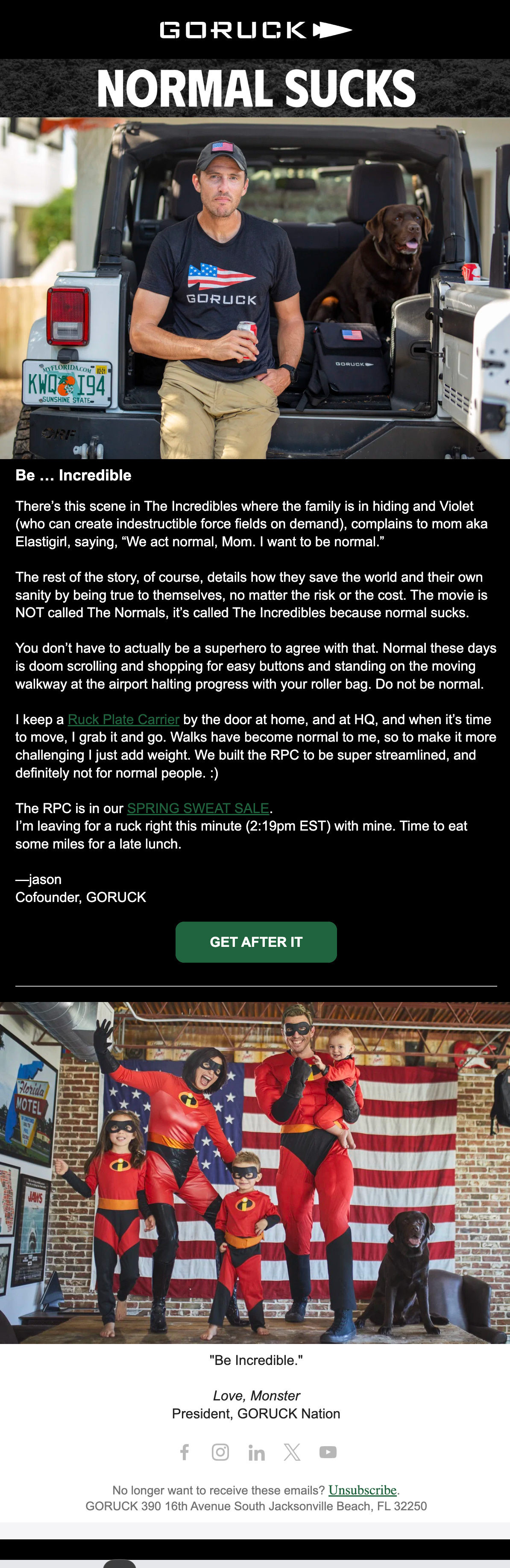
GORUCK
Format: Email
Why I like it: They’ve been on a roll lately with great emails. But I loved the narrative/identity-driven approach to this. Shows how the product works into everyday life without being overwhelming. The family pic helped. Also, the CTA slaps.
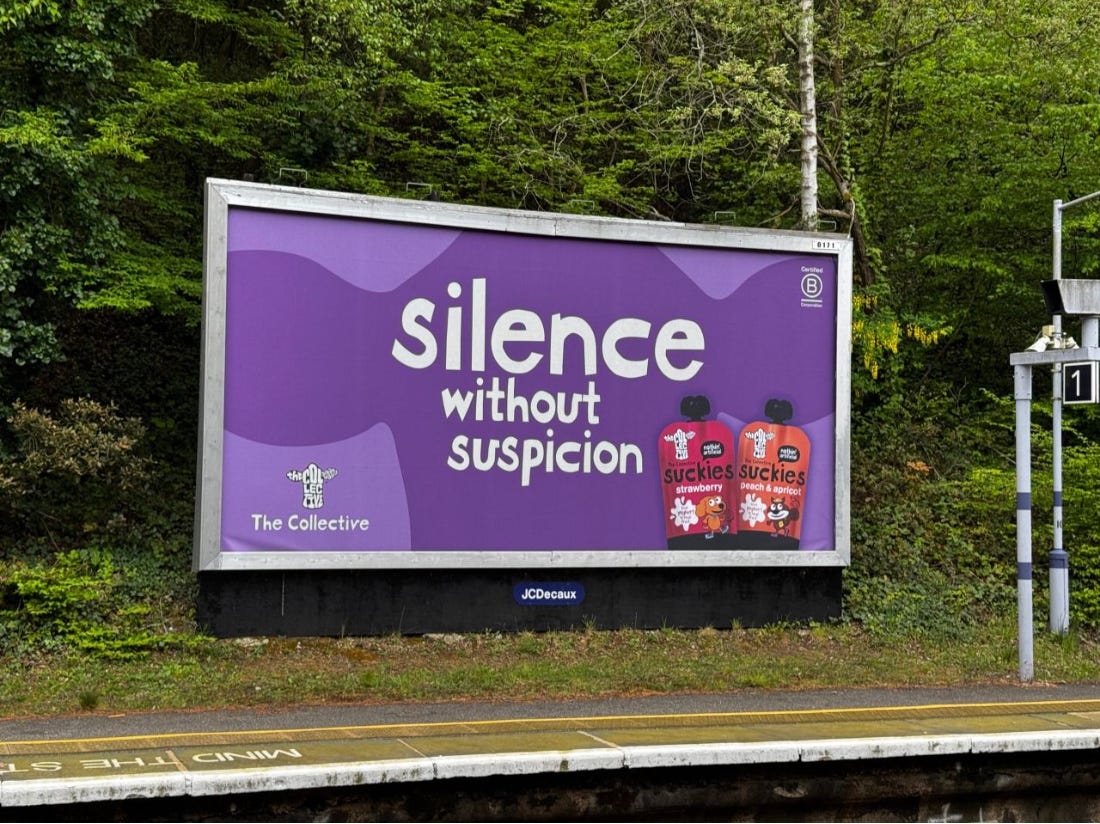
THE COLLECTIVE
Format: Billboard
Spotted By: Ben Bailey
Why he likes it: “If you fancy yourself as a copywriter you should study this ad. Ernest Hemingway was reported to have once been asked to write a story in six words or less - this ad manages it in three.”
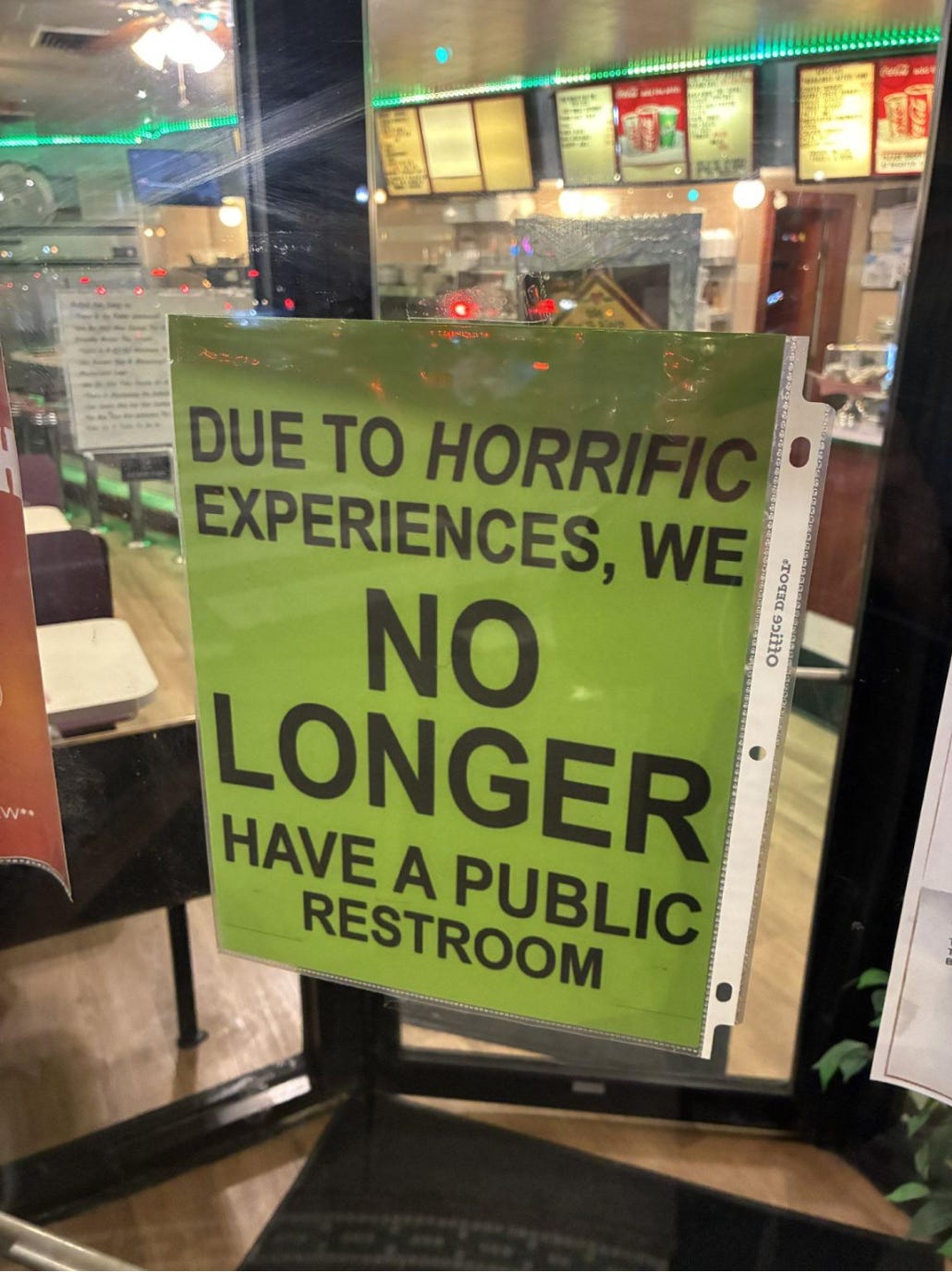
UNKNOWN
Format: Advertisement
Spotted By: Jade Trott and Lee Trot
Why I like it: One horrific word can make or break an advertisement.
That’s it for this week! If you have questions or comments — drop a note below.
✌️
Matt
Are you new here? Thinking about subscribing? Here’s what else you can expect.