


Welcome to the 122nd edition of the Weekly Round-Up — your once-a-week digest filled with copywriting insights, AI tips, must-read articles, pretty cool copy examples, and more!
In this week’s issue:
Copy Tip: Emotional Language vs. Emotional Truth
AI Tip: 3 Questions to Answer for Project Instructions
The Post-Purchase Moment Where Loyalty is Won or Lost (via MarTech)
Podcast Pick: AI & Your Career (Think Fast, Talk Smart)
Swipe File Additions

Copy Tip of the Week
“Heartfelt.”
“Unforgettable.”
“Life-changing.”
These words are trying to feel emotional.
They don’t.
There’s a difference between emotional language and emotional truth — and most copy gets it backwards.
Emotional language reaches for feeling-adjacent words. Words that signal emotion without actually creating it. “Heartfelt” doesn’t make anyone feel anything. It just points at the idea of a feeling and hopes the reader fills it in.
Emotional truth is different. It’s specific. It’s a moment the reader has actually lived — the 2am scroll before a big decision, the way a product smells like something familiar, the relief of finally not having to think about it anymore.
One describes a feeling. The other triggers it.
The principle: specificity is what creates resonance, not vocabulary.
So next time you reach for an emotional word, stop and ask: what’s the actual moment? Write that instead.
AI Insight of the Week
Your Project system prompt should answer three questions.
Most people write their Project system prompt like a job posting. A list of instructions. A few tone descriptors. Maybe a note about what to avoid.
That’s not enough.
A system prompt is the difference between a specialist and a generalist. And the gap between them isn’t instructions — it’s the context.
Claude doesn’t just need to know what to do. It needs to know who it is, who it’s talking to, and what a good output actually looks like.
Those three questions:
Who is Claude in this Project?
Not just a role — a point of view. A senior conversion copywriter thinks differently than a brand strategist. Define the lens, not just the title.Who is Claude writing for?
Your audience’s awareness level, sophistication, objections, language. The more specific this is, the less you’ll spend correcting outputs that are technically correct but tonally wrong.What does good look like?
Give Claude an example of your best work — not average output, your best. That’s the bar it’s calibrating to.
Answer all three and your Project stops feeling like a tool you’re fighting and starts feeling like a team member who actually gets it.

Must-Read Articles
The Post-Purchase Moment Where Loyalty is Won or Lost (via MarTech)
Why I recommend it: Your order confirmation email isn’t just operational — it hits right when the buyer’s brain shifts from excitement to doubt. Kath Pay breaks down four buyer modalities and how a single post-purchase email can reassure all of them without heavy segmentation.
Pilcrow – Design Story (via Umbrik Journal)
Why I recommend it: The ¶ symbol started as a paragraph marker, was hand-drawn in red ink by medieval rubricators, and got killed off when the printing press moved too fast for anyone to draw it. A short, nerdy origin story for a character you’ve seen a thousand times without knowing its name.
Handmade Designs: The New Trust Signal (via NN/Group)
Why I recommend it: When anyone can generate a polished image in minutes, polish stops being a quality signal. NN/g breaks down why handmade imperfection — in visuals and in voice — is becoming the new trust signal. The same logic applies to copy: if it sounds like a person wrote it, people believe a person cares.
You Might Also Like:


THINK FAST TALK SMART
AI & YOUR CAREER
🎧 Listen on iTunes | Listen on Spotify
Why I recommend it: 70% of the average skills in your job will change by 2030 — and you get to decide how. Former Obama speechwriter Aneesh Raman breaks your work into three buckets (what AI can do, what you do with AI, and what only humans do) and makes the case that curiosity, creativity, and communication are the career moat.

🔓 Want access to my entire swipe file database?
Subscribe here to unlock the magic link.
Pretty Fly Copy
GORUCK
Format: Email
Why I like it: A great example of taking a core customer complaint with your competitors, amplifying it, and then demonstrating how your version of the product is different. Using negative competitor reviews from Amazon? Brilliant.
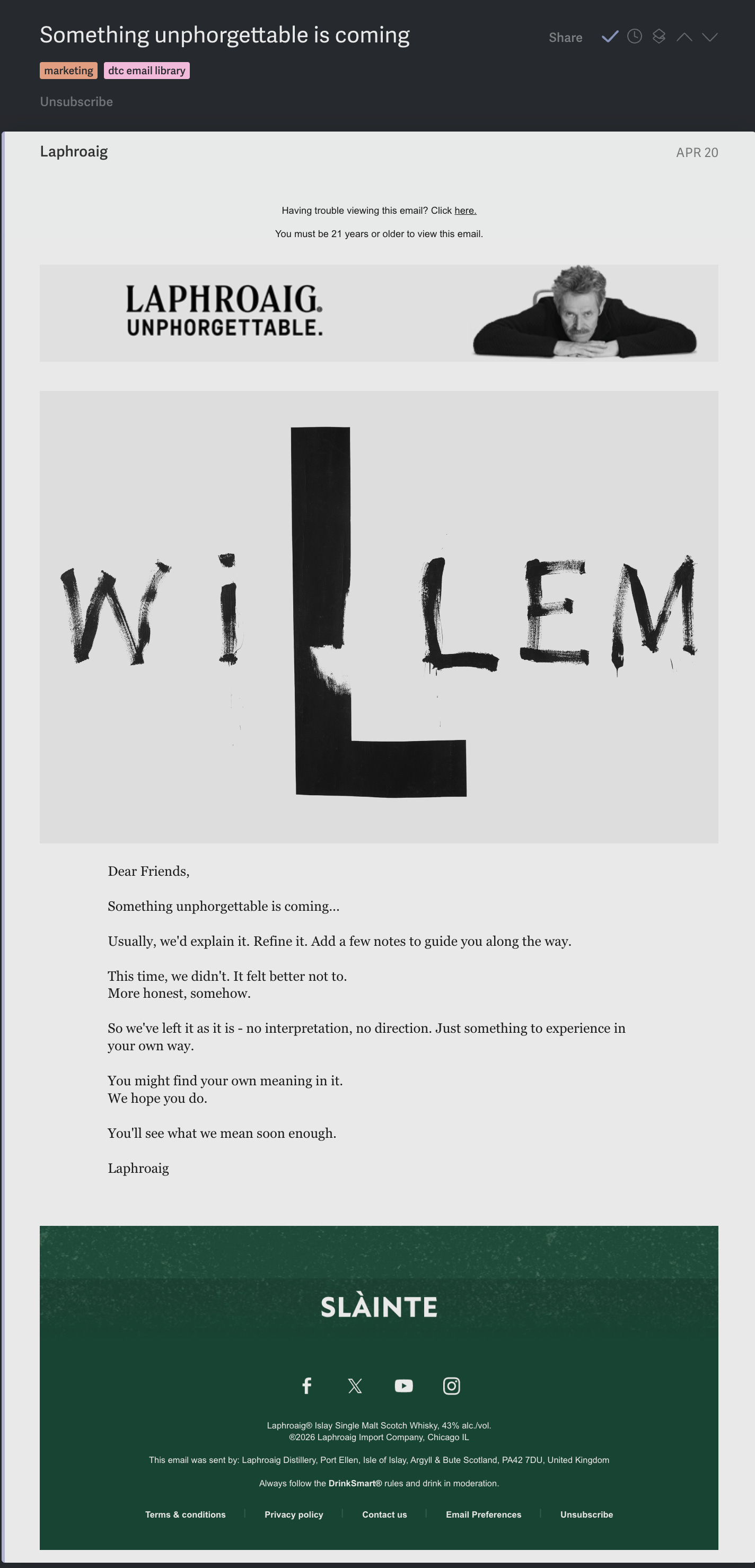
BUNNAHABHAIN
Format: Billboard
Why I like it: What’s something your customers always get wrong about your product? Well, turn it into a billboard (or a headline) that frames it differently.
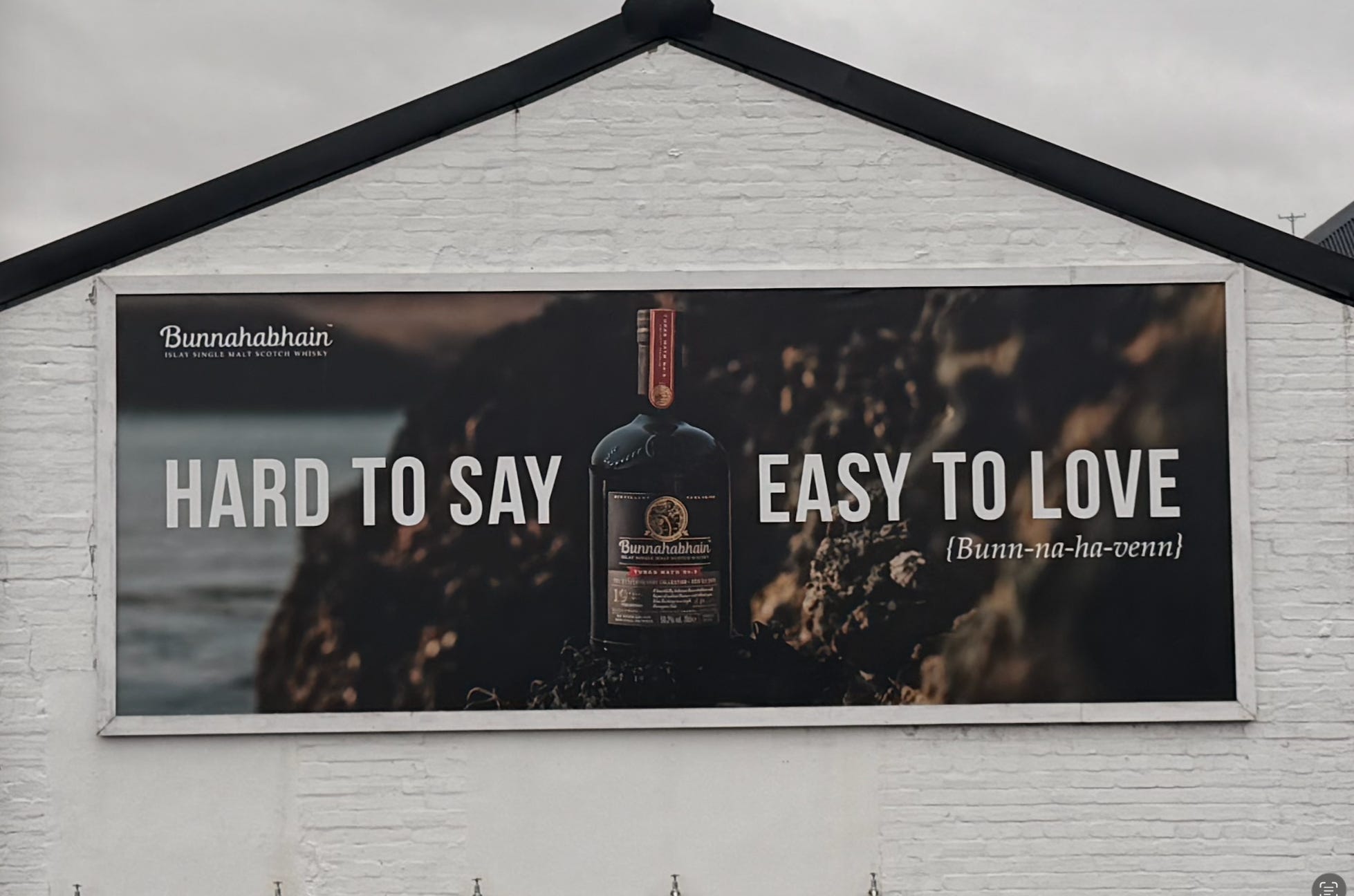
LAPHROAIG
Format: Email
Why I like it: Sometimes respelling words is a great way to integrate your brand voice and identity into a rather unspectacular sentence. That’s what Laphroaig did here (”unphorgettable”).
That’s it for this week! If you have questions or comments — drop a note below.
✌️
Matt
Are you new here? Thinking about subscribing? Here’s what else you can expect.